DECEMBER 2025
15 Years of Accord – Founder's Reflection

Published by
Accord Team
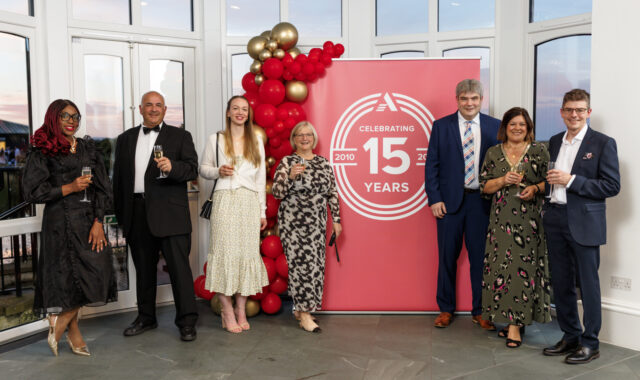
Earlier this year, we celebrated 15 years of Accord. As we near the end of a fantastic year, we’re taking a moment to look back - and ahead - with the people who started it all.
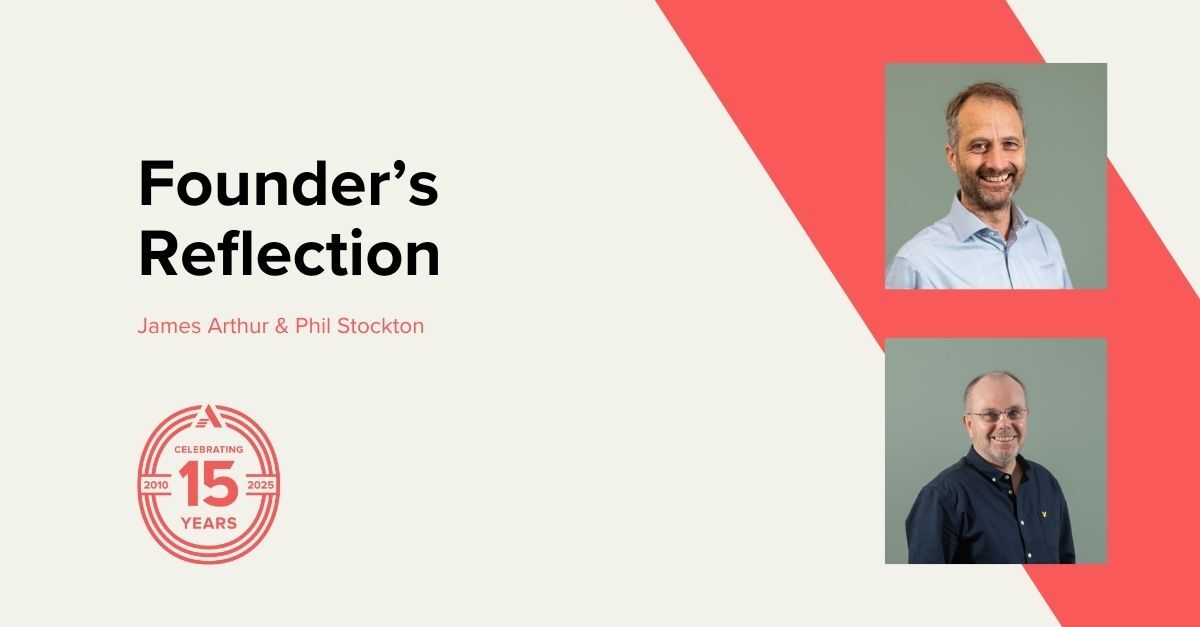
In a special edition of our Meet the Team series, we sit down with two of Accord’s founders, James Arthur and Phil Stockton, to hear their perspective on the journey so far. From the early days of bold decisions and big ambitions, through the evolution of the business and team, and the decision to be employee owned, they share the values, moments and lessons that have shaped Accord over the years.
THE SPARK OF AN IDEA:
When Accord was founded in 2010, it wasn’t just about starting a new consultancy - it was about doing things differently. James tells us more:
“We’d always had the idea of creating something where people’s contributions were genuinely recognised. Over the years, we’d worked with colleagues who made an enormous impact: delivering for clients, solving problems, going above and beyond - but they weren’t always rewarded in a way that reflected that.
“We wanted to build a business that was successful in its own right, but also structured in a way that could reward people fairly for the value they bring. That thinking led us to the employee ownership model, something we committed to from day one.
“Personally, I was also looking for a working environment with a good degree of autonomy. Most of us want to shape our own days and have a say in how we work. Creating Accord gave us the chance to build that kind of culture from the ground up.”
Phil mirrors this sentiment and how it led them to the employee ownership model:
“We (myself, James and our third co-founder Alan) had worked together at another company, and we’d talked on and off about starting something of our own. That company was eventually acquired, and over time, it became harder to share rewards fairly across the team, which didn’t sit right with us.
"That growing frustration really sparked the ambition to start our own company. We realised we just wanted to share the rewards of good performance more equitably. We felt everyone should have a stake in the business — and that’s what led us to employee ownership.”
BIG AMBITIONS:
From the outset, Accord was driven by the belief that there was a better way to run a consultancy. James shares what that opportunity meant at the time:
“We wanted to align the commercial interests of the staff with the commercial interests of the company. I’ve always felt there’s often a tension between the two. A company might be focused on generating as much profit as possible, while individual team members might be more driven by personal development or wanting to work with a range of customers.
“So the opportunity we saw was to establish a business model that could bridge that gap. We believed - and still believe - that aligning those interests creates the conditions for better outcomes all round.”
GROWTH & EVOLUTION:
Earlier this year, Accord marked 15 years in business. James reflects on the pace of those early years, and how the company has evolved since:
“We grew very quickly in the early years. To be honest, that was a little unnerving. I clearly remember going to a company dinner, maybe two and a half years in, and being taken aback by how many people were in the room. There were definitely moments where I felt close to being overwhelmed by the pace of it all.
“Outside of that initial burst, though, our growth has been much more organic. It’s been steady and intentional — shaped by the kind of work we take on, the people we bring in, and the culture we want to nurture.
“We work in a specialised domain, and we needed to be credible with both UK and international customers. That meant being big enough to work with a range of customers, but still small enough to operate a very lean and flat management structure.”
CULTURE & PEOPLE:
James shares the core values that have shaped Accord’s culture from the very beginning:
“I think autonomy is vital. We try to work in such a way that each of us feels the maximum possible sense of self determination. As much as possible, I like to be in control of what I do each day – and I assume others feel the same way.Also, transparency really counts: in decision-making, in communicating business performance, and in sharing what we see as opportunities and threats. That’s important and it's bound up tightly with autonomy. We can’t expect people to be independent and to act in the mutual interest of the business without giving them the information they need.
“So from the start, to the best of our ability, we have shared as much as we can with the team, putting people in the best position to make the hundred micro-decisions that come up every day.
“And, finally, trust. I think we’re lucky to work in a team where there’s a tremendous degree of trust between members. People are open when they need help, they’re prepared to offer help, and they know where to go to find it. I think everyone feels confident that if they do reach out, they’ll get a sympathetic hearing and a positive contribution. I’m not sure how you create that — but I’m certainly delighted when it happens.”
Phil continues, highlighting how autonomy has helped unlock new ideas and innovation:
“Our culture has provided the team with the agency to decide their own destiny - within the constraints of the business. This also allows us to pursue research and development, which, given the size of our business, is a considerable focus.
“It has allowed us to develop our products, such as CHARM and Combustor. I think it encourages that atmosphere that people need to come up with ideas. Having the opportunity to do that — it’s quite a privilege really, at times.”
----
Keep an eye next year as we share part two of Phil and James’ reflections — covering turning points, key milestones, legacy and where they see Accord heading next.
Be sure to follow us on LinkedIn for the latest from Accord.